
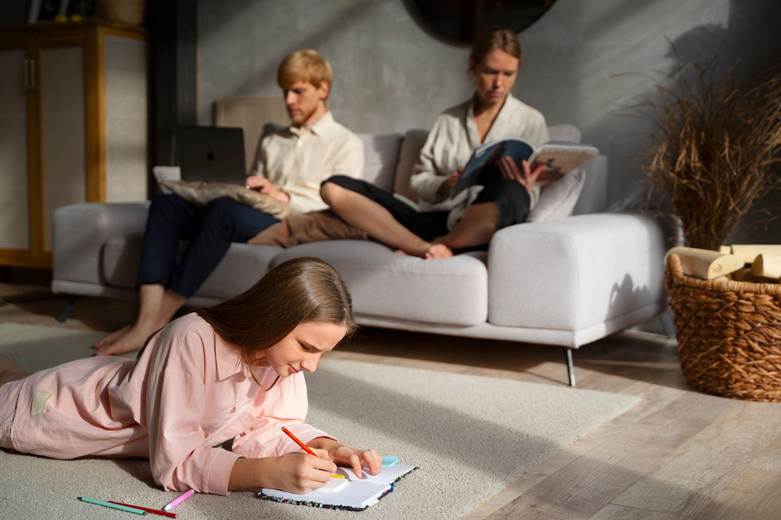
Therapeutic skills can be easier to understand than to use consistently in daily situations. Reviews of Alpine Academy can lead families to explore how a family-style residential environment creates opportunities for students to practice communication, responsibility, emotional regulation, and problem-solving beyond scheduled therapy sessions.
Learning a strategy during counseling is one part of personal growth. Applying that strategy when a disagreement occurs, when a responsibility needs attention, or when frustration develops is another part of personal growth. A residential model built around everyday interactions can help connect those two experiences.
Therapy Does Not Happen Only During Appointments
Traditional ideas about therapy often center on scheduled sessions between an individual and a clinician.
Those sessions can provide important opportunities to discuss experiences, recognize patterns, develop strategies, and establish goals. Yet many of the situations in which therapeutic skills become necessary happen outside the counseling room.
Communication difficulties can emerge during meals. Frustration can appear while completing responsibilities. Disagreements may develop during recreation or other everyday activities.
A residential environment provides opportunities for skills discussed in therapy to be practiced when real situations arise.
Instead of considering therapeutic work as something that begins and ends with an appointment, everyday experiences can become part of the learning process.
A Family-Style Setting Creates Everyday Practice
Alpine Academy describes its residential approach as based on the Teaching Family Model, with students living in family-style homes supported by trained staff who live on site.
This structure matters because daily life naturally creates situations that formal therapeutic sessions cannot always recreate.
Sharing living spaces requires communication. Responsibilities require follow-through. Differences between people require compromise and problem-solving.
These moments provide practical opportunities to work on skills.
A conversation about handling frustration can become more meaningful when someone later encounters frustration and has the opportunity to respond differently.
The objective is not to eliminate ordinary challenges. Those challenges can provide the setting in which healthier responses are practiced.
Smaller Homes Can Make Daily Interactions More Personal
The supplied information describes eight family-style homes, each generally housing eight to ten students.
A smaller residential setting can create a different experience from living within one large institutional environment.
Daily routines become centered around a household.
In this setting, meals, responsibilities, recreation, preparation for school, and evening routines take place in a way that resembles elements of ordinary family life.
That environment can make interpersonal dynamics easier to observe and address.
When someone struggles with communication or responsibility, the issue does not necessarily exist as an abstract therapeutic concept. It can appear during a recognizable everyday situation where guidance can be connected directly to what happened.
Continuity Can Matter When Building New Habits
Developing a new skill usually requires repetition.
Someone rarely becomes an effective communicator after just one conversation about communication. Emotional regulation, problem-solving, accountability, and relationship skills similarly require continued practice.
Continuity can therefore matter.
The Teaching Family Model emphasizes a structured family-style environment rather than treating residential life simply as supervision between clinical appointments.
When expectations and approaches remain consistent throughout daily routines, students have repeated opportunities to understand what is expected and practice new responses.
A difficult interaction one evening can become an opportunity for reflection. A similar situation several days later can provide another chance to approach the problem differently.
That repetition can turn concepts into habits.
Ordinary Responsibilities Can Become Learning Opportunities
Household routines may appear unrelated to therapy at first.
Ordinary parts of life include completing responsibilities, preparing for the day, managing personal belongings, arriving on time, and participating appropriately in shared spaces.
They also involve useful skills.
Following through on responsibilities can involve planning and accountability. Sharing spaces requires awareness of other people. Managing a schedule requires organization. Handling an unwanted task can involve frustration tolerance.
A family-style residential model can use these everyday situations as opportunities for psychoeducational skill development.
This helps connect therapeutic growth with practical life rather than limiting it to conversations about feelings or behavior.
Relationships Provide Real-Time Feedback
Many important skills involve other people.
Listening, expressing needs appropriately, resolving disagreements, respecting boundaries, accepting feedback, and considering another person’s perspective cannot be developed entirely in isolation.
Living with others creates repeated opportunities to practice them.
Not every interaction will go smoothly, and that can itself be useful.
A disagreement can reveal a communication pattern that needs attention. A misunderstanding can create an opportunity to practice clarification. A successful resolution can reinforce a healthier approach.
These experiences provide immediate context for concepts that might otherwise remain theoretical.
Clinical Support and Daily Living Can Complement Each Other
Residential learning does not replace individualized therapy.
Instead, the two can complement one another.
Alpine Academy states that its therapeutic services include work involving individuals, families, peer groups, specialty peer groups, and equine therapy. The supplied program information also emphasizes the weekly involvement of students’ immediate families.
Clinical sessions can also serve as a setting for more profound discussion and individualized therapeutic work.
Residential life provides another setting where students can practice relevant skills.
When these parts of a program are connected, experiences from everyday life can inform therapeutic conversations, while strategies discussed in therapy can be brought back into daily routines.
Family Involvement Helps Connect Different Environments
Progress within a residential setting eventually needs to extend beyond that environment.
Family involvement can help create that connection.
When immediate family members participate regularly in the therapeutic process, they can develop a clearer understanding of the skills, expectations, and communication approaches that the team practices.
This can also create opportunities to address relationship patterns involving the broader family rather than focusing only on the individual student.
The transition from a structured residential environment to home can involve significant changes. Involving families throughout the process may help bridge the gap between what is practiced in one setting and what will be needed in another.
Accreditation Provides a Defined Framework
The Teaching Family Model is not simply a description for living in smaller residential homes.
Alpine Academy is nationally accredited through the Teaching Family Association.
Accreditation matters because it connects implementation of the model with established standards and evaluation criteria rather than leaving each residential home to interpret the approach independently.
A structured framework can help create consistency around how staff members teach skills, respond to situations, and support daily development.
That consistency is particularly relevant when a program aims to integrate residential living with therapeutic objectives.
Real-Life Practice Can Reveal What Still Needs Work
Someone may understand a skill intellectually without being ready to use it consistently.
For example, explaining an appropriate way to respond to frustration is different from remembering that strategy while actually frustrated.
Everyday practice reveals that difference.
When a skill is difficult to apply, the experience can identify an area requiring additional attention.
That is valuable information.
Progress does not necessarily mean responding perfectly to every situation. It can involve recognizing patterns sooner, recovering from setbacks more effectively, communicating differently, or gradually requiring less support.
Daily life provides repeated opportunities to observe those changes.
Structure Should Ultimately Support Greater Independence
A structured environment is most useful when students can eventually use the skills they develop within it outside that structure.
Students will not always live in the same home, follow the same schedule, or have the same level of support.
The longer-term objective is therefore broader than successfully following a residential routine.
Communication, responsibility, problem-solving, emotional regulation, and relationship skills need to become increasingly transferable to home, education, and future independence.
Practicing those skills within ordinary daily situations can help make that transition less abstract.
Final Thoughts
Therapeutic growth involves more than understanding what a healthier response should look like.
The harder step is using that response when everyday life creates a real opportunity to do so.
A family-style residential environment can provide those opportunities repeatedly. Meals, responsibilities, shared spaces, disagreements, routines, and relationships all create situations where communication and problem-solving skills become practical rather than theoretical.
Clinical therapy remains important, but the hours between therapy sessions matter too.
When residential life, therapeutic support, family participation, and a consistent Teaching Family Model work together, ordinary experiences can become opportunities for continued practice.
That may be one of the most meaningful distinctions of a family-style approach: daily life is not simply what happens between therapeutic sessions. Daily life can become part of learning to use therapeutic skills in the situations where they will matter most.
